13 languages, the same depth in each
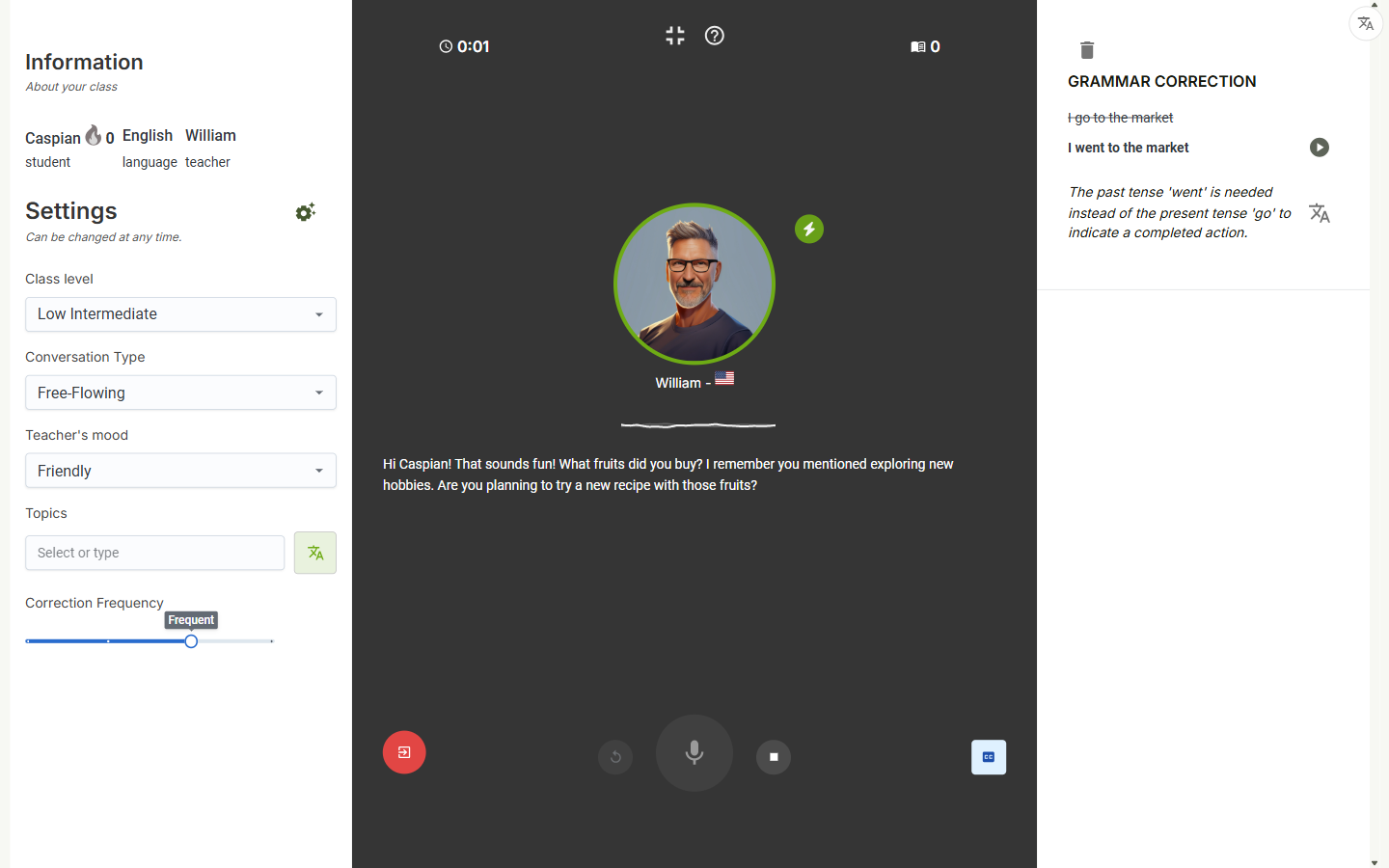
Breadth is easy to claim. What matters is whether the thirteenth language is as complete as the first: the same teachers with accents you choose, the same corrections while you speak, the same lessons, flashcards and six review games built from your own mistakes.
Every language we teach
English
English spelling rarely tells you how a word sounds, so the fastest way in is to say it and be corrected on the spot.
Spanish
Spanish pays you back early: the spelling matches the sounds, so you can read aloud almost from day one.
French
French is generous on paper and demanding out loud: many letters at the end of words stay silent, and the ones that link across words decide whether you are understood.
Portuguese
Portuguese has nasal vowels that exist in few other languages, and a rhythm that shifts between Brazil and Portugal.
German
German asks you to hold a sentence in your head: the verb often waits until the end, and every noun carries a gender and a case.
Italian
Italian is written close to the way it sounds, so reading aloud works from the first week.
Czech
Czech stacks consonants in ways that look impossible until you hear them said slowly, and the ř sound exists almost nowhere else.
Polish
Polish spelling looks dense — sz, cz, ś, ć, rz — but it is consistent, and it stops being frightening once someone says it with you.
Russian
Russian starts with a new alphabet, and Cyrillic takes days rather than months.
Japanese
Japanese uses three scripts — hiragana, katakana and kanji — and levels of politeness that change the verb depending on who you are speaking to.
Hindi
Hindi is written in Devanagari, where each sign carries a consonant and a vowel together, so reading comes in steps rather than all at once.
Korean
Korean is written in Hangul, an alphabet built to be learned quickly — most students are reading it within a week.
Mandarin Chinese
Mandarin has four tones and a neutral one, and the tone is part of the word rather than decoration on it, so it has to be practised out loud from the start.
Not on the list?
Ask for it. Inside every community there is an Ideas screen where any member can propose a language we don't teach yet. Our team answers every suggestion, and the ones that gather support get a date on the roadmap — that is how Turkish got there. See how ideas become features.
Pick a language and start talking
Your first class is free. Choose a teacher, choose a topic, and talk.
Try a free class