Rehearse the one situation you are dreading
A Targeted Practice is a structured exercise built around a single situation. You choose it, your teacher runs it, and you are corrected the whole way through. There is one for every level, from counting to ten to a job interview.
And when you are not dreading anything, it is the fun way to mix things up: negotiate the release of a hostage, survive an interview that goes wrong, check into a haunted hotel, haggle at a market.
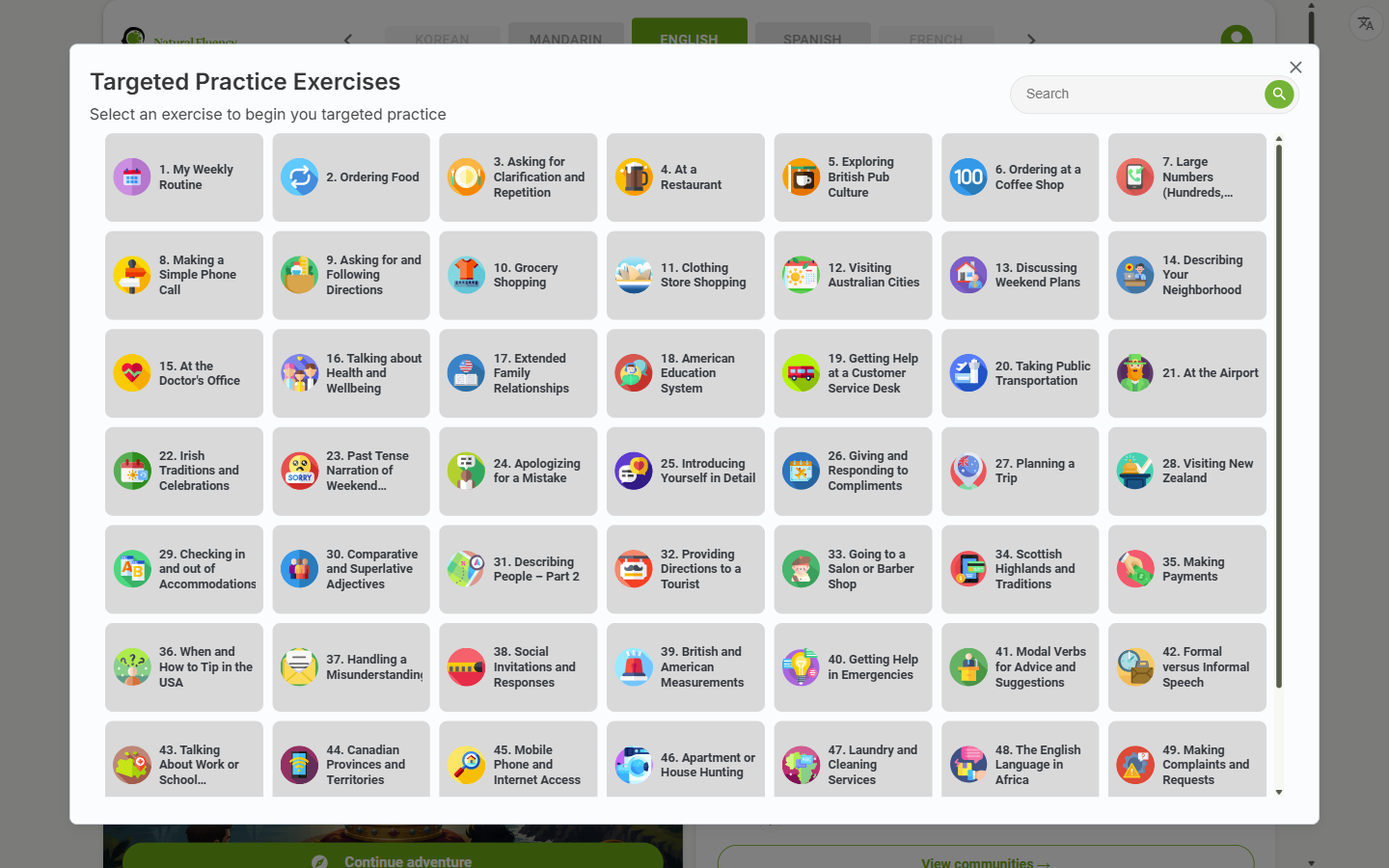
One situation, done properly
Free conversation wanders, which is good for you most days. A Targeted Practice does the opposite: it has a situation, a goal and an end.
A structured exercise, not a free chat
Ordering at a restaurant. A job interview. Checking into a hotel. The exercise sets the scene and stays in it until you have been through the whole thing.
At any level
"Counting from one to ten" is a Targeted Practice. So is a doctor's appointment where you have to say what hurts and since when. The exercise is built for the level you are on.
Corrected as you speak
Grammar, vocabulary and pronunciation, one correction at a time, as often as you asked to be corrected. Keep the ones that matter and discard the rest.
Or something you would never do in real life
Negotiate the release of a hostage. Sit through the job interview where everything goes wrong. Check into a hotel that turns out to be haunted. Argue a stallholder down at a market.
Same short, structured shape, same corrections, any level — and a much better story afterwards.
Choose one, or ask for one
Pick an exercise from the list, or tell your teacher the situation you actually have coming up — or the ridiculous one you would rather have — and let them run it with you.
Soon you will be able to open an exercise from a link.
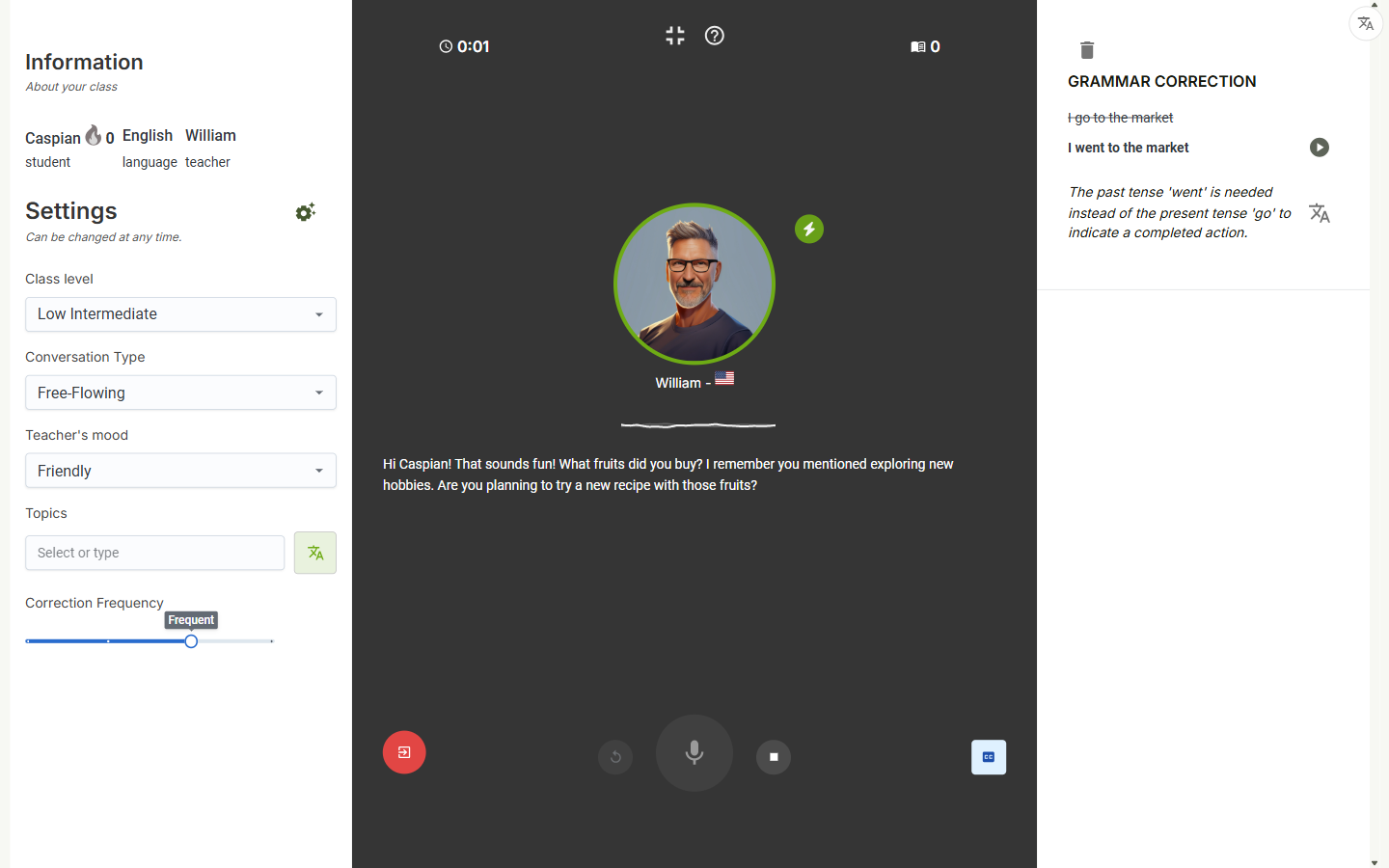
Conversation, practice, lesson
Most days you will want free conversation: up to five topics you chose, going wherever the talk goes. When something specific is coming — a trip, an interview, a phone call you have been putting off — swap it for a Targeted Practice and rehearse that one thing instead. When nothing is coming and you are bored of your own life, take the hostage negotiation. Either way the class ends the same: feedback, a writing exercise with correction, and reading, listening and video suggestions built from what you actually said. Your flashcards and review games update themselves.
Situations to start with
Ordering at a restaurant
Read the menu, ask what a dish actually is, and send something back politely.
A job interview
Answer the questions everyone asks, and the one you hope they don't.
Counting from one to ten
Your first exercise, on your first day, before you can say anything else.
A doctor's appointment
Describe what hurts, since when, and how much — in the right words.
Checking into a hotel
Your booking, your room, and the thing that is wrong with it.
Introducing yourself
Your name, your work, where you are from, and a question back.
A hostage negotiation
Stay calm, buy time, and get everyone out of the building. In the past tense, ideally.
The interview that goes wrong
They have your CV upside down, the wrong name, and a very strange first question.
The haunted hotel
Check in, complain about the noise from room 237, and ask to be moved. Politely.
Bargaining at a market
Name a price, hear the laughter, and walk away slowly enough to be called back.
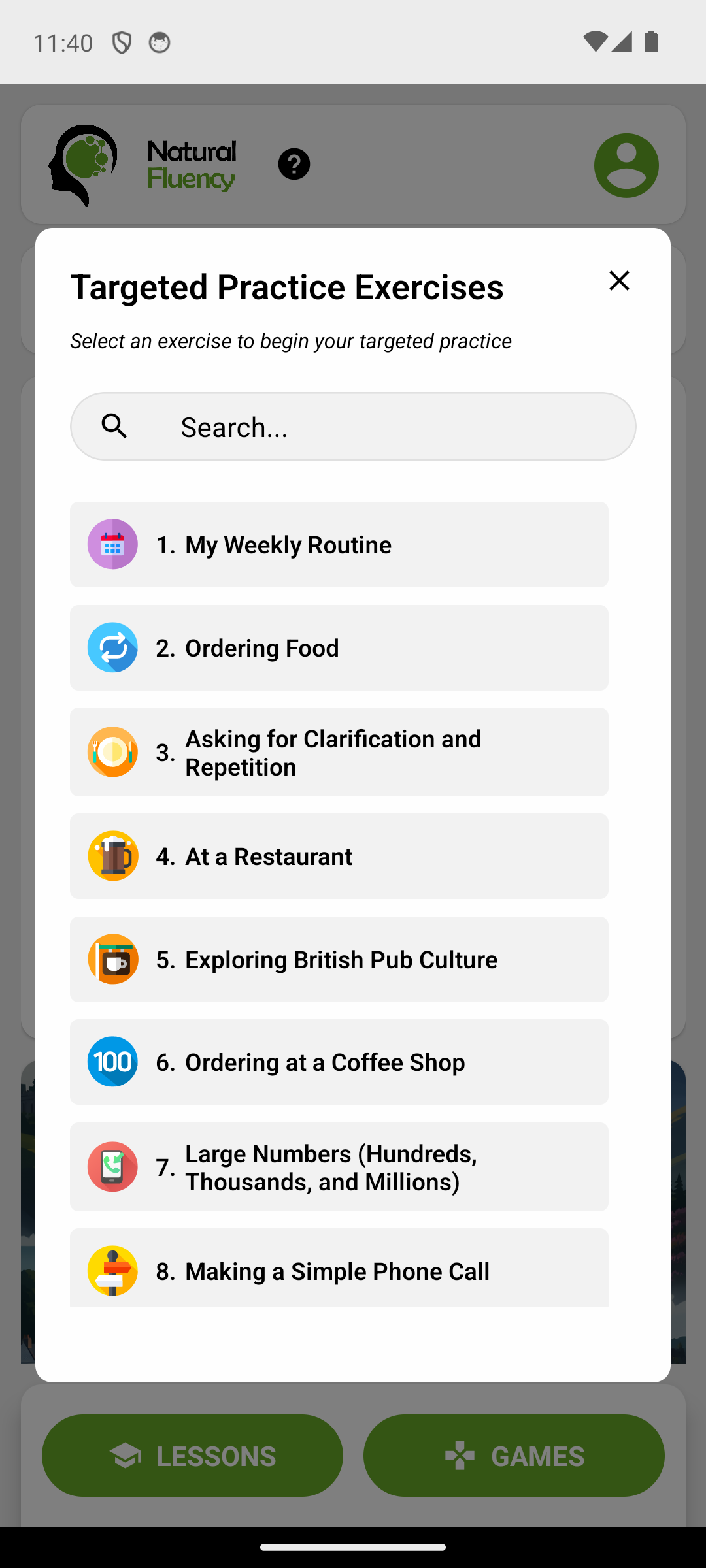
Pick the situation, start talking
Your first class is free. Bring the exercise you need, or ask your teacher for one.
Try a free class